
Choosing a Climbing Wall Manufacturer is not only a design decision. It is a safety and operations decision that affects liability risk, staff training, inspection readiness, and long-term maintenance. Whether you are building a climbing area for a family entertainment center, a trampoline park, a mall attraction, a hotel, or a sports facility, the manufacturer you choose will determine how confidently you can run the activity every day.
This guide explains what buyers should evaluate when selecting a Climbing Wall Manufacturer and how to avoid the common problems that appear after installation.
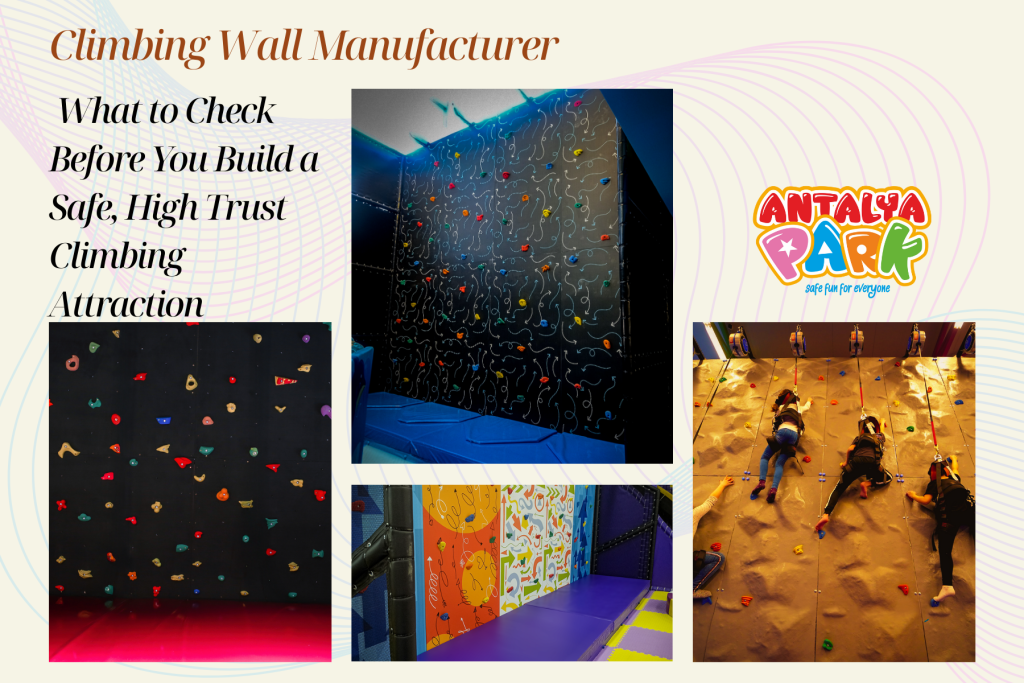
Start with the Venue and the User Group
A professional Climbing Wall Manufacturer should begin with your venue details and your user profile. A wall designed for children and first-time climbers is very different from a wall designed for teenagers, competitive use, or training.
You should expect early questions about:
Ceiling height and available wall height
Floor space and safe fall zones
Age range and supervision level
Expected daily traffic and peak-hour flow
Whether you want auto belay, top rope, bouldering, or a mix
If a manufacturer proposes a wall before understanding these basics, the design may look good but perform poorly in real operation.
Choose the Right Wall Type and Safety System
A strong Climbing Wall Manufacturer helps you choose the correct wall category for your venue and staff capacity.
Common commercial formats include:
Bouldering walls with impact protection on the floor
Roped walls with top rope systems
Auto belay walls for higher throughput and simpler supervision
Beginner-friendly themed walls for family venues
Each system has different training, inspection, and operational needs. The manufacturer should explain the trade-offs clearly rather than pushing the most expensive option.
Engineering, Structure, and Subframe Quality
Climbing walls are structural systems. The wall panels you see are only one part. The subframe, anchoring method, and load planning matter just as much.
A reliable Climbing Wall Manufacturer should be able to explain:
How loads are calculated and distributed
How the frame is anchored to the building
How panel joints are designed for stability over time
How access for maintenance and inspection is planned
Ask for documentation that supports the engineering approach and installation requirements. Clear documentation is a sign of professional control.
Surface Quality, Holds, and Route Setting Practicality
For commercial venues, the wall needs to stay attractive and usable. That depends on surface texture, hold quality, and how easily routes can be changed.
A good Climbing Wall Manufacturer plans for:
Durable surface finishing that stays consistent
Hold attachment points designed for frequent changes
A practical strategy for route setting and refresh cycles
Holds and hardware that support safe grip and stable fixing
Route variety drives repeat visits. If the wall cannot be refreshed easily, it becomes less valuable over time.
Throughput, Supervision, and Guest Experience
A climbing wall can become a bottleneck if it is not designed for throughput. A professional Climbing Wall Manufacturer should plan the activity area to support safe waiting lines, clear staff positioning, and a smooth guest journey.
Ask about:
How many climbers can use the wall at once
Where staff should stand for supervision
How entry, briefing, and exit are handled
How the design reduces crowding in busy periods
When the operational flow is clean, the wall feels safer and more premium.
Installation, Testing, and Handover
Installation quality matters. A professional Climbing Wall Manufacturer should provide a clear installation plan, realistic timeline, and a structured handover process.
Before you sign, confirm:
Who installs and what is included
Commissioning and testing steps after installation
Training support for staff if needed
Inspection readiness and documentation package
Spare parts planning and ongoing support
These details protect both safety and uptime.
A Practical Direction Many Buyers Explore
If you are comparing companies that provide broader indoor attraction solutions, including soft play, trampoline zones, and climbing elements, Antalya Park is one manufacturer many investors review for full project support. On a support site, it can be useful to direct readers to completed project references and catalog materials so they can evaluate real installations and scope.
Final Checklist Before Choosing a Climbing Wall Manufacturer
A Climbing Wall Manufacturer is usually a strong candidate when:
They start with your venue and user profile, not a generic design
They explain wall type choices and safety systems clearly
They provide engineering logic and strong documentation
They plan for route refresh, maintenance access, and throughput
They offer structured installation, testing, and after-sales support
When those points are strong, your climbing wall becomes a trusted attraction that runs smoothly and helps your venue grow.